
Claude vs Grok for AI Simulation: Which One Actually Works?
Short answer: If your simulation needs deep logic and won't tolerate sloppy reasoning, go with Claude. If you need real-time data or you're running hundreds of scenarios on a budget, Grok's your pick. And if you're serious about simulation work, you'll probably end up using both.

Table of Contents
- What Is AI Simulation and Why Model Choice Matters
- Claude vs Grok: Quick Comparison Table
- Head-to-Head: Simulation Performance by Dimension
- Practical Simulation Use Cases
- Pricing & Accessibility for Simulation Workloads
- Final Verdict: Which AI Should You Use?
- FAQ
1. What Is AI Simulation and Why Model Choice Matters
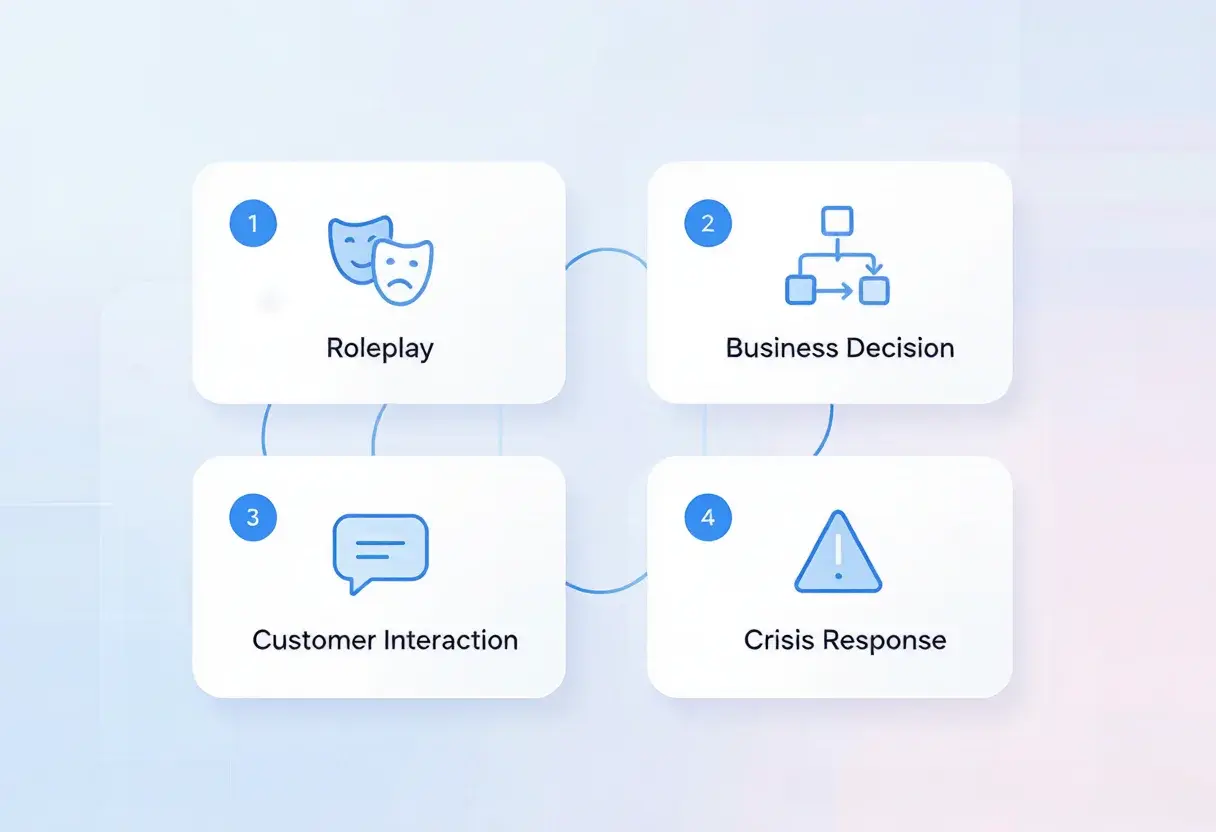
"AI simulation" just means using a language model to act out a scenario. Roleplay conversations, business decision trees, customer interaction flows, crisis drills, creative script drafts, technical walkthroughs — same idea, different costumes. Pick the wrong model and your simulation falls apart after ten turns when the AI forgets who it's supposed to be.
There are three things that matter when you're picking a model for simulation:
Can it stay coherent across a long conversation? A lot of models sound great for the first five messages then start contradicting themselves. For a simulation to work, the model has to track roles, constraints, and context across dozens of exchanges without losing the thread.
Do you need deep reasoning or fast responses? Running a legal compliance walkthrough is a different beast from spinning up a casual chatbot. Claude leans toward the first, Grok toward the second. You have to know what your simulation actually needs.
How strict do the safety guardrails need to be? Enterprise training, healthcare, and anything regulated demand a model that won't veer off-script. Creative storytelling? You might want more room to play.
2. Claude vs Grok: Quick Comparison Table
Here's the baseline — numbers and facts, no fluff:
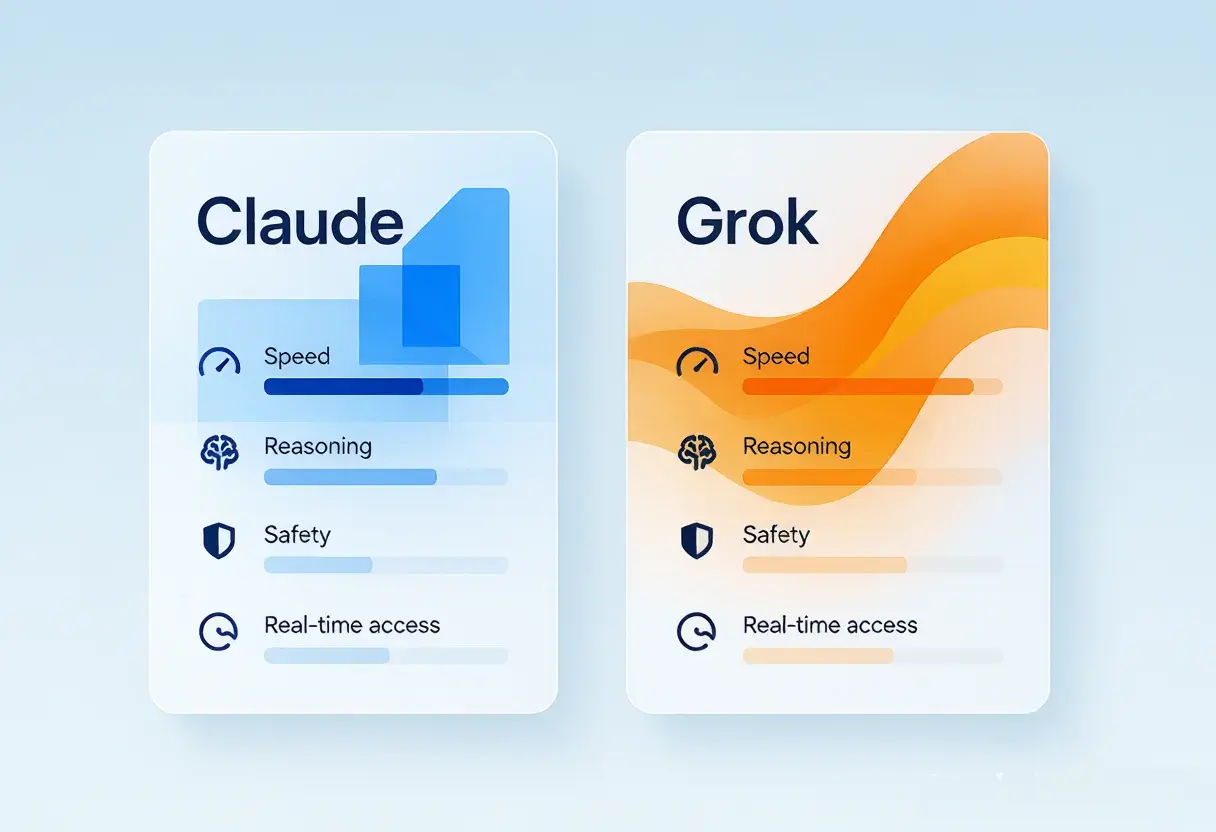
| Claude (Sonnet 4.5 / Opus 4.5) | Grok (3 / 4) | |
|---|---|---|
| Made by | Anthropic | xAI (Elon Musk) |
| What it's good at | Reasoning, structure, safety | Speed, real-time data, X integration |
| Context window | 200K tokens | Up to 256K tokens |
| Response speed | Moderate (prioritizes accuracy) | Fast (prioritizes time-to-first-token) |
| Real-time data | None built in | Native X (Twitter) integration |
| Safety approach | Constitutional AI — strictest in the industry | Moderate — looser policy |
| Cost | Premium (~$20/mo Claude Pro) | ~30–40% cheaper per token |
| Typical use | Research, long-form writing, enterprise | Social media, trend watching, quick prototypes |
Pricing pages: Get Grok on FamilyPro · Get Claude Pro
3. Head-to-Head: Simulation Performance by Dimension
3.1 Reasoning Depth in Complex Scenarios
This is where the gap between the two is clearest.
Claude was designed for multi-step logic. If your simulation involves a supply chain decision tree, a legal compliance walkthrough, or a medical diagnostic drill, Claude holds up across 20+ turns without losing the plot. Its training also means it's more likely to flag a logical gap than confidently bullshit through it.

Grok can handle light reasoning — 3 to 5 logical steps, the kind of thing you'd do in a "what should I buy" comparison. But it's built for conversation speed, not logical rigor, and that shows when the stakes go up.
Pick Claude if wrong answers have real consequences.
3.2 Creative & Roleplay Simulation
Both can roleplay. The difference is voice and consistency.
Claude does nuanced characters that stay in character. It picks up on subtext, adapts to shifting dynamics, and doesn't suddenly forget the personality it's supposed to be playing. For screenplay drafts, game dialogue trees, or narrative therapy practice, it's the safer bet.

Grok is looser and more playful — sometimes unpredictably so. Great for casual character bots or brainstorming sessions where a curveball is welcome. Not great when your script needs a consistent voice across 50 pages.
Claude for professional creative work. Grok for messing around on social.
3.3 Real-Time & Social Simulation
Grok's home turf. Claude doesn't even play here.
Grok plugs directly into X (Twitter). That means it can pull live trending data, sentiment signals, and breaking news context. For simulations that need to know what's happening right now — social media crisis drills, trend forecasting, community management training — no other frontier model does this natively.

Claude works off its training cutoff. You can bolt on web search tools, but out of the box it's blind to current events. If your simulation depends on "what's trending this hour," that's a dealbreaker.
Grok wins here. No contest.
3.4 Coding & Technical Simulation
If your simulation involves teaching people to code — architecture walkthroughs, API design rounds, debugging drills — the model's technical accuracy is non-negotiable.
Claude regularly tops coding benchmarks. It writes idiomatic, testable code and can handle large refactors without you having to babysit every line. Good fit for technical training where people are learning from the output.
Grok does fine on common programming tasks and has gotten better with every generation. Works for prototyping. Falls behind on complex multi-step technical problems.
Claude for educational and enterprise technical simulations.
3.5 Safety & Ethical Boundary Simulation
If you're simulating anything in healthcare, law, finance, or child safety, the safety framework actually matters.
Claude uses Constitutional AI — strict, consistent, and the closest thing the industry has to a standard. It refuses harmful roleplay cleanly and flags sensitive content without being useless about it.
Grok is looser. That can be a feature if you're doing edgy creative work or unrestricted brainstorming. But it also means it might generate things Claude would flat-out refuse, which is a problem in any compliance context.
| Safety angle | Claude | Grok |
|---|---|---|
| How it handles refusals | Context-aware, nuanced | Minimal, permissive |
| Regulatory compliance | Built in | You bring your own guardrails |
| Creative freedom | Constrained | Wide open |
| Best context | Enterprise, healthcare, legal | Creative, marketing, social |
Claude for anything regulated. Grok when there's no compliance department watching.
4. Practical Simulation Use Cases
4.1 Enterprise Training → Claude
Customer service roleplay, compliance walkthroughs, management decision drills — these need structure, accuracy, and safety. Claude's deep reasoning and reliability make it the obvious foundation.
No credit card needed to browse.
4.2 Social Media Marketing → Grok
Viral content strategy, community engagement, real-time trend response — Grok is built for this. X integration means your simulation runs on current data, not a stale snapshot from six months ago.
No credit card needed to browse.
4.3 Product Prototyping & Decision Modeling → Both
The workflow that actually gets results:
- Claude builds the scenario framework, evaluates tradeoffs, and produces the polished analysis
- Grok runs fast prototypes, pulls real-time market signals, and stress-tests ideas at conversational speed
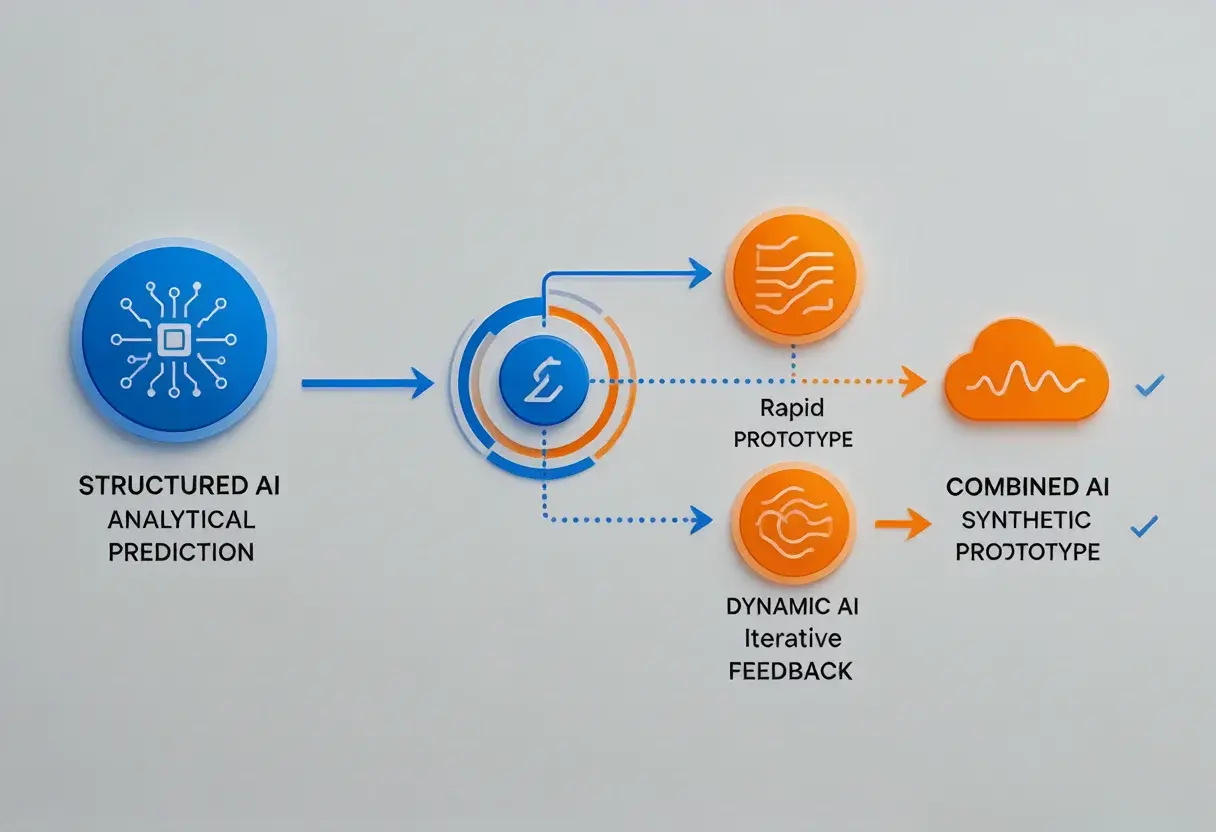
You get structured depth plus real-time agility. Neither model gives you both alone.
4.4 Creative Writing & Story Generation → Depends
Polished novel chapter? Screenplay scene? Claude. Wild ideation or social-first micro-fiction? Grok. A lot of writers I've talked to use Claude for drafting and polishing, then throw ideas at Grok when they're stuck.
5. Pricing & Accessibility for Simulation Workloads
Cost adds up fast when you're running dozens (or hundreds) of simulation turns.
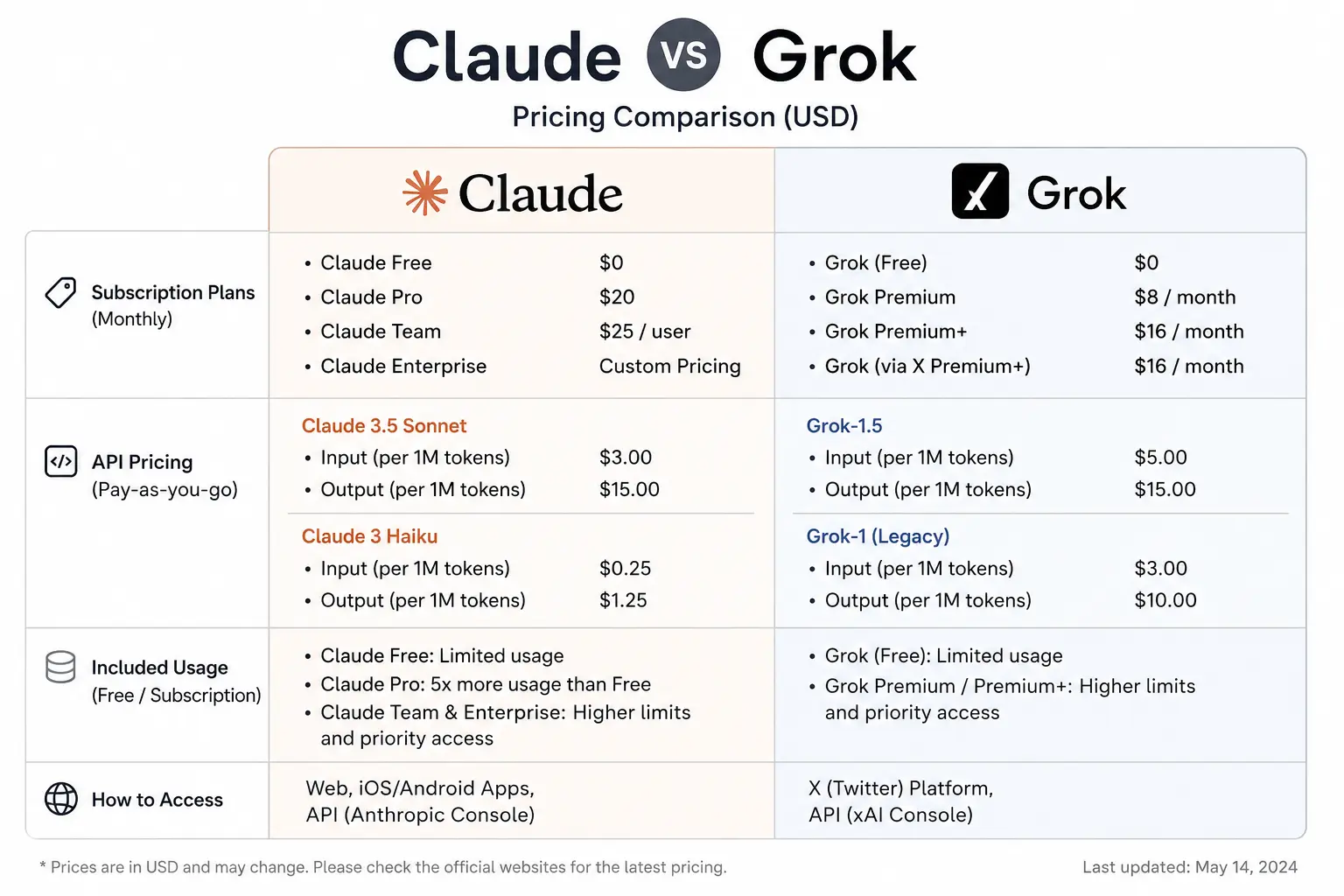
| Claude Pro | SuperGrok (via FamilyPro) | |
|---|---|---|
| Monthly cost | ~$20/mo (direct) | Competitive shared pricing |
| Per-token cost | Higher | ~30–40% lower |
| Usage caps | Generous, fair-use limits | Extended limits for continuous work |
| Best for | Low-volume, high-stakes | High-volume, budget-sensitive |
| Get it | Claude Pro → | Grok → |
Say you're running 500 customer interaction scenarios a week — Grok's per-token pricing saves real money. For a focused 20-turn compliance simulation where getting it wrong costs more than the API bill, Claude's premium is worth paying.
6. Final Verdict: Which AI Should You Use for Simulation?
| Your simulation needs... | Go with |
|---|---|
| Deep reasoning, multi-step logic | Claude |
| Real-time social data and trends | Grok |
| Professional creative writing, consistent voice | Claude |
| Fast, casual conversation prototyping | Grok |
| Regulated industry compliance (healthcare, legal, finance) | Claude |
| Unrestricted creative brainstorming | Grok |
| Technical coding and educational simulations | Claude |
| High-volume, cost-sensitive workloads | Grok |
| The best of both | Use both together |
Ready to start?
| What | Where |
|---|---|
| Try Claude for Simulation | Get Claude Pro → |
| Try Grok for Simulation | Get Grok → |
| Try Grok Imagine (Free AI Video Generator) | Generate Free → |
No credit card needed — jump in and test both.
FAQ
Which is better for AI simulation, Claude or Grok?
Depends on the simulation. Claude handles deep reasoning and structured scenarios better — enterprise training, legal compliance, complex decisions. Grok is better at real-time social simulation because of its X integration and faster response speed.
Which one for creative roleplay?
Claude writes more nuanced, consistent characters. Better for professional creative work. Grok is more playful and unpredictable — fun for casual roleplay, less reliable for long-form projects.
Can Grok do real-time social media simulations?
Yes — that's its strongest feature. X integration gives Grok access to live trending data that no other major model has natively.
Which model is cheaper for simulation work?
Grok costs about 30–40% less per token. For high-volume simulation work, the savings add up. Claude costs more but delivers better quality on complex, high-stakes tasks.
Does Claude have real-time data access?
No. Claude works off its training data cutoff. You need external tools like web search plugins to feed it current information.
How big is the context window difference?
Grok: up to 256K tokens. Claude: up to 200K tokens. That said, Claude tends to recall information more reliably across the full window, which matters more for long documents than the raw token count.
Can I use both together?
Yes — and for serious simulation work, that's the move. Use Claude for structure, deep reasoning, and final output. Use Grok for fast prototyping, real-time data, and social context.
Which is safer for sensitive scenarios?
Claude. Its Constitutional AI framework makes it the safer option for healthcare, legal, financial, and any regulated simulation where the wrong answer has consequences.