
GPT Codex Explained: Why OpenAI Is Putting It Into ChatGPT
The first time I truly felt Codex and ChatGPT needed integration wasn’t at a launch—it was when I copied the same requirement from GPT into Codex for the third time. GPT could organize logic and plan; Codex could execute code, modify files, and generate tests. The problem? The handoff wasn’t smooth.
What drained me wasn’t coding—it was moving context back and forth. Repeating requirements, re-adding constraints, reminding Codex which files to touch, then returning to GPT to review. As projects grew, fragmentation multiplied: cross-module changes, refactoring, tests, frontend-backend coordination—humans became the bottleneck.
So when OpenAI announced on June 2, 2026, during their developer event, that Codex would be integrated into GPT in the coming weeks, my first thought was: finally, a product-level fix for a real workflow pain point. 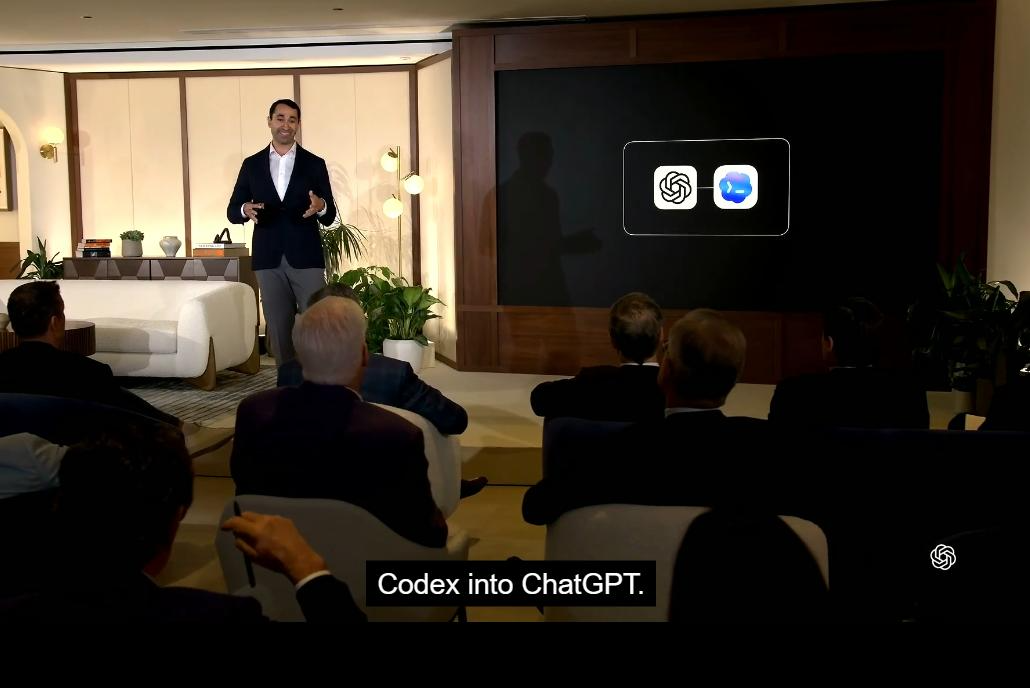
In this article, I’ll explore: What is GPT Codex? Why integrate Codex into ChatGPT? How does it work in real workflows? How do GPT, Codex, and ChatGPT differ? And how could this change AI-driven work in the future?
What Is GPT Codex?
GPT Codex is not an official product name, but users often use it to describe the experience of GPT + Codex working together. GPT handles understanding and planning, while Codex handles execution.
What users really care about is not the technical definition. The real question is: what happens when GPT’s reasoning ability is combined with Codex’s execution ability?
In my view, GPT Codex is more like a collaboration model.
GPT is responsible for understanding, reasoning, explaining, and planning. Codex is responsible for execution, code changes, test generation, and task handling. ChatGPT becomes the interface that carries the whole interaction.
The first time I clearly felt this division was when I was working on an internal tool.
I asked GPT to break down the module: user input, permission checks, state changes, error messages, and logs. GPT quickly gave me a clear module structure. But when it came to actually modifying the code, I handed the task over to Codex.
If the task boundary was not clear enough, Codex might touch other modules or even change global state.
There are similar real user workflows on Reddit. One user shared that they use ChatGPT for ideation and planning, then hand the task to Codex for execution, and finally bring the code diffs back into ChatGPT for a review loop. The post also mentioned that the real key to making the workflow stable was moving from a “big prompt” to smaller, more controllable batches.
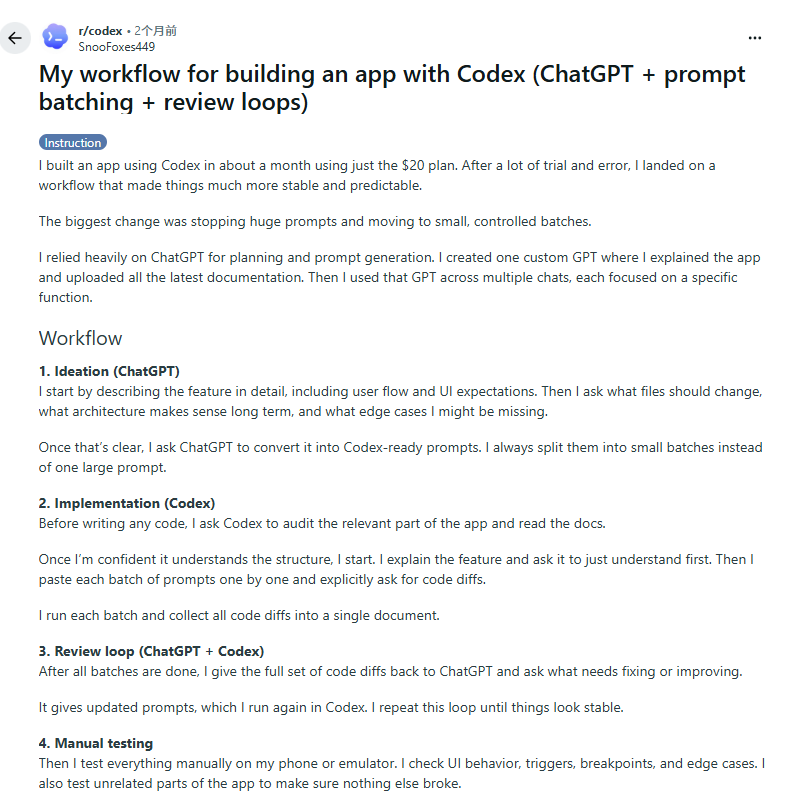
This shows that the value of GPT Codex is not just that “AI can write code.” Its real value is shortening the distance between “thinking it through” and “getting it done.”
Before, these two actions lived in separate tools, and the human had to connect them. Now OpenAI is trying to move the workflow that users have already figured out into the product experience itself.
Why OpenAI Is Integrating Codex With ChatGPT
Why Codex and GPT Integration Matters
OpenAI is not putting Codex into ChatGPT just to make coding more convenient.
The deeper reason is that users do not want to keep acting as the middle layer between two AI tools.
For a long time, my own workflow looked like this: I discussed the requirement with GPT, turned that into a prompt for Codex, then copied Codex’s output back into GPT for review. If something went wrong, I rewrote the prompt and ran the process again.
The workflow worked, but every round consumed attention. I became the context courier.
Reddit users have described similar workflows: planning inside ChatGPT, updating design docs, writing a small ticket, handing it to Codex, running build/tests, manually verifying the result, and then pasting the Codex report back into ChatGPT to update the status. That workflow feels very real, and it looks a lot like how I use AI for projects: GPT acts like the project manager, Codex acts like the execution engineer, and the human is stuck in the middle passing messages, checking results, and correcting direction.
So the real value of Codex and GPT integration is not just “can I copy code fewer times?”
The real question is whether thinking, execution, and review can move into a more continuous workflow.
How ChatGPT Is Becoming an AI Work Console
ChatGPT is moving from a chat box into something closer to a task management tool.
In the past, ChatGPT was more like a conversation interface. You ask, it answers. You follow up, it continues. You paste a piece of code, it explains. But once Codex enters the picture, the model starts shifting from “question and answer” to “task execution.”
That is why Codex mobile is such an important signal.
It is not about writing a full project on your phone. It is about checking task progress, approving changes, adjusting direction, reviewing outputs, and keeping a task moving forward. OpenAI’s introduction of Codex mobile also emphasizes that users can start, manage, and monitor Codex sessions inside the ChatGPT mobile app.
This feels more like project management than traditional programming.
To me, the real product shift is this: ChatGPT is becoming an AI work console. You are not just asking questions inside it. You are handing in tasks, watching them move forward, and stepping in at key moments.
Why Developers Care About GPT Codex
Developers care about GPT Codex not because they are missing “a chatbot that can code.”
They care because in real development workflows, the hardest part is often not writing the first version of the code. It is breaking down the task, defining boundaries, running tests, reviewing the output, and correcting direction.
OpenAI’s ChatGPT release notes mentioned that after Codex entered the ChatGPT mobile preview, users could continue a thread from their phone, answer questions, change direction, approve actions, review what Codex found, and view terminal output, diffs, and test results.
This shows that OpenAI wants GPT + Codex to maintain context during long tasks, keep executing, and enter real workflows. It is not just a coding feature. It is moving closer to a long-term collaboration product.
How GPT Codex Works Inside ChatGPT: Real Workflows and Use Cases
How to Use GPT Codex for Planning and Coding
When I first started using GPT Codex, I did not realize it would change the way I handle small module-level tasks.
My old process was simple: discuss the requirement in GPT, hand it to Codex to write the code, and then return to GPT to check the output. But every step required me to explain the context again, especially when the task involved multiple files or modules. It was mentally expensive.
Later, I started breaking tasks down more carefully, and the results improved a lot.
For example, when handling a login module, I would not directly ask Codex to “build a login feature.” Instead, I first asked GPT to help me identify the module states: token expiration, loading, retry logic, error messages, and signup flow compatibility. At this stage, the goal was not to write code. The goal was to turn a vague requirement into an executable task.
Then I handed the task to Codex: only modify the auth service and login form, generate token expiration tests, and do not touch other modules. After Codex produced the diff, I returned to GPT for review, checking whether the change broke the existing flow or missed any edge cases.
Once this loop started working, my biggest takeaway was not that “Codex writes faster.” It was that I no longer had to keep re-explaining the same problem. GPT thinks the task through first, Codex executes it, and then GPT helps review it. This kind of collaboration is much more stable than simply asking AI to generate a block of code.
How Codex Handles Clear Coding Tasks
I have used a similar workflow for API log analysis and batch form validation.
For API log analysis, I first asked GPT to help me define the metrics: request volume, error rate, average response time, and top failed endpoints. Once the analysis framework was clear, I asked Codex to write a script to process the logs. Then I returned to GPT to evaluate whether the output supported the next decision.
If I had asked Codex to “analyze the logs” from the beginning, it might have produced a runnable script, but the metrics might not have been the right ones. That difference matters. Codex is very good at executing clear tasks, but it is not always the best place to start with a vague goal.
Batch form validation is similar. GPT first helped me break down the rules: required fields, format validation, duplicate fields, and error message priority. Codex then turned those rules into a script. After that, I used GPT to check whether the script logic missed anything.
Reddit users have shared similar experiences: treating ChatGPT as a second brain for reasoning, planning, consulting, and high-level direction, while treating Codex as the builder for editing files, running checks, and implementation.
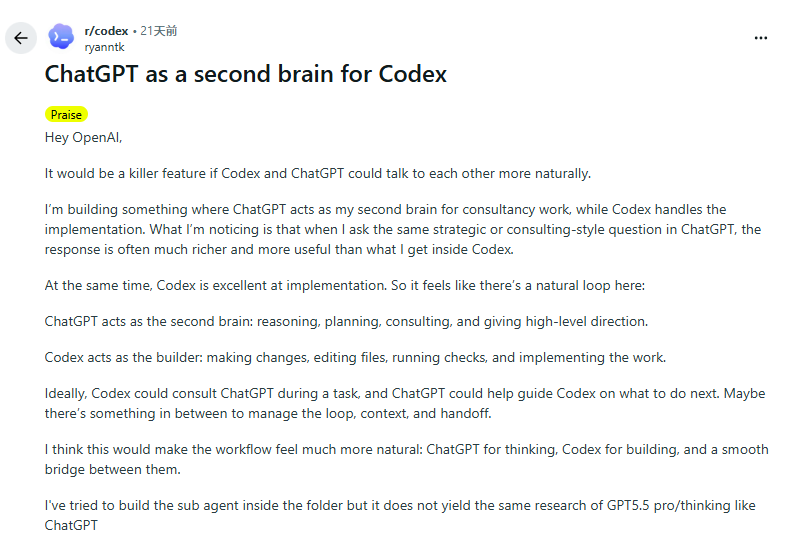
These cases made me realize more clearly that the value of GPT Codex is not that AI can complete everything in one shot. Its value is making “planning, execution, and review” much smoother.
How GPT Reviews Codex Outputs
The role of GPT review is not just to check whether the code is correct. It also helps review task boundaries, logic, and edge cases.
I usually do not accept Codex’s output directly now. After it modifies the code, I ask GPT to take another look: Did this change break the existing flow? Did it miss any abnormal states? Are the tests only covering the happy path? Were any files changed that should not have been touched?
This step may sound unnecessary, but in real projects it matters a lot. Codex can execute tasks, but it may not fully understand business priorities or hidden boundaries that should not be crossed. GPT’s review helps me check those implicit rules again.
That is why I now prefer to see GPT Codex as a collaboration loop, not a single tool.
GPT Codex vs ChatGPT: What’s the Difference?
ChatGPT Thinks, Codex Executes
When people hear Codex, many immediately think of ChatGPT’s coding ability: “Oh, so it’s just ChatGPT that can write code, right?” That’s only half the story.
From real usage, ChatGPT is better at understanding questions, explaining logic, breaking down tasks, and reasoning. Codex, on the other hand, feels more like an agent that can enter file structures, execute tasks, run checks, and produce outputs. The value of GPT Codex is that it connects these two abilities into one loop: thinking first, execution next, review after that.
A Real Refactor Workflow
A project refactor made this difference very clear to me. I first discussed the plan with GPT inside ChatGPT: which modules should be split, which dependencies should stay, and how to avoid breaking the main flow. GPT helped me map the logic, anticipate risks, and define the boundaries.
If I had asked Codex to execute too early, it might have started changing files before the task was clear enough. I’ve seen that happen before. It may touch global routing, shared state, or files I didn’t want changed. Then I have to go back and clarify: don’t change this part, don’t delete that, write tests before modifying the logic.
Now I do it differently. I let GPT break the plan down first, then hand a clearer task to Codex. Codex modifies files, runs tests, outputs a diff, and I review everything inside ChatGPT. That is very different from simply asking ChatGPT to “generate code.” It is a workflow that can be checked, rolled back, and iterated.
Why GPT Codex Feels Like a Workflow, Not a Code Generator
I had a similar experience helping a non-technical team build an internal tool prototype. GPT helped turn vague requirements into module-level tasks, and Codex handled the implementation side: creating files, adding tests, generating sample data, and returning results. ChatGPT alone could have produced a decent code snippet, but it would not have moved through the project structure and pushed the work toward a reviewable state in the same way.
A Reddit user described this relationship well: ChatGPT acts as the “second brain” for reasoning, planning, and direction, while Codex acts as the “builder” for editing files, running checks, and implementing changes. That matches my experience closely.
So I would summarize it this way: GPT is the planner and explainer. Codex is the executor. GPT Codex connects both into a loop, so the handoff between thinking and execution no longer becomes the burden.
That’s why GPT Codex feels less like “AI that writes code” and more like a workflow solution. It is not about replacing developers. It is about reducing friction, keeping context intact, and making multi-step coding tasks easier to manage.
What GPT Codex Means for the Future of AI Workflows
The future of AI work will not depend on a single model. It will rely on multiple AI tools working together.
That is already how I use them myself. GPT helps me break down logic and plan tasks. Codex executes code or generates scripts. Other tools like Claude, Gemini, and Grok help with data, validation, or automation. Each tool has its own role, and together they are more efficient than any one tool alone.
For example, when I work with API logs, I first use GPT to design the analysis metrics and process. Then I ask Codex to write the script that processes the data. Finally, I return to GPT to review the output. This loop made me realize that AI is no longer just answering questions. It can actually be embedded into a workflow and complete a cycle of planning, execution, and review.
Another example is content operations. An operations colleague can first use GPT to organize an event review framework, then use Codex or a scripting tool to process data and generate a visual report, and finally use GPT again to turn the results into a written summary. This shows that Codex is not only a programmer’s tool. It can also support non-technical workflows.
As more AI tools enter daily workflows, cost becomes a real issue. At first, I only subscribed to GPT Plus, and that felt manageable. But once you start paying attention to Codex, Claude, Gemini, Grok, and other tools, subscription costs stack up quickly. For students, freelancers, and small teams, it is not realistic to subscribe to every tool separately over the long term.
That is why I started paying attention to platforms like FamilyPro.
I prefer to understand it as a cost management strategy. When you need to use GPT Plus for the long term and also want to try different AI tools like Claude, Gemini, and Grok, FamilyPro’s sharing model can help users split subscription costs. It does not just lower the barrier to one specific tool. It lowers the overall cost of exploring a multi-AI workflow.

Overall, the meaning of GPT Codex is not just a feature upgrade. It reminds us that the future of AI will not be a set of isolated tools, but a complete work system. GPT handles thinking and planning. Codex executes tasks. Other AI tools support different parts of the workflow. And humans are freed from repetitive operations so they can focus on judgment, boundary setting, and review.
FAQ
What is GPT Codex?
GPT Codex is not an official product name. It is more like a user term for the experience of GPT + Codex working together. GPT handles understanding and planning, while Codex handles execution.
How does Codex work inside ChatGPT?
Codex performs coding tasks inside ChatGPT, such as modifying code, generating tests, processing diffs, and producing reviewable results.
What is the difference between GPT and Codex?
GPT breaks down logic, reasons through problems, and plans tasks. Codex executes code, generates tests, and produces results. GPT Codex combines the two into a closed-loop workflow.
Will GPT Codex replace developers?
No. It reduces repetitive coding work, but architecture decisions, boundary judgment, and review still need humans.
Is GPT becoming the strongest AI with Codex?
If “strongest” means entering real workflows, understanding context, and executing tasks, then Codex integration does bring GPT closer to that direction.
Conclusion: Is GPT Becoming the Strongest AI?
I do not really like saying GPT is already the strongest AI. That kind of title feels too absolute.
But from a product perspective, Codex entering ChatGPT does make GPT feel closer to a real work system. In the past, GPT was strong at answering. Now the direction of GPT Codex is participation in execution.
The strongest AI in the future may not be the model that chats the best. It may be the one that can enter real workflows, understand context, execute tasks, accept review, and reduce meaningless switching.
GPT Codex is making that loop more real.
What truly changes productivity is not one smarter answer. It is the full loop from setting a goal, to AI executing the task, to you reviewing the result. GPT Codex is bringing that loop into reality.