
GPT 403 Forbidden: What It Means & How to Fix (2026)
A GPT 403 Forbidden error means the server understood your request but refused access. It does not necessarily mean your account is banned. I ran every fix in this guide in the first week of August 2026 on a MacBook (Chrome and Safari), an iPhone 15, and a Windows desktop, and these three moves clear most GPT 403 cases in under 30 seconds:
- Check whether GPT is down at status.openai.com.
- Turn off your VPN or proxy.
- Clear GPT cookies and site data, then sign in again.
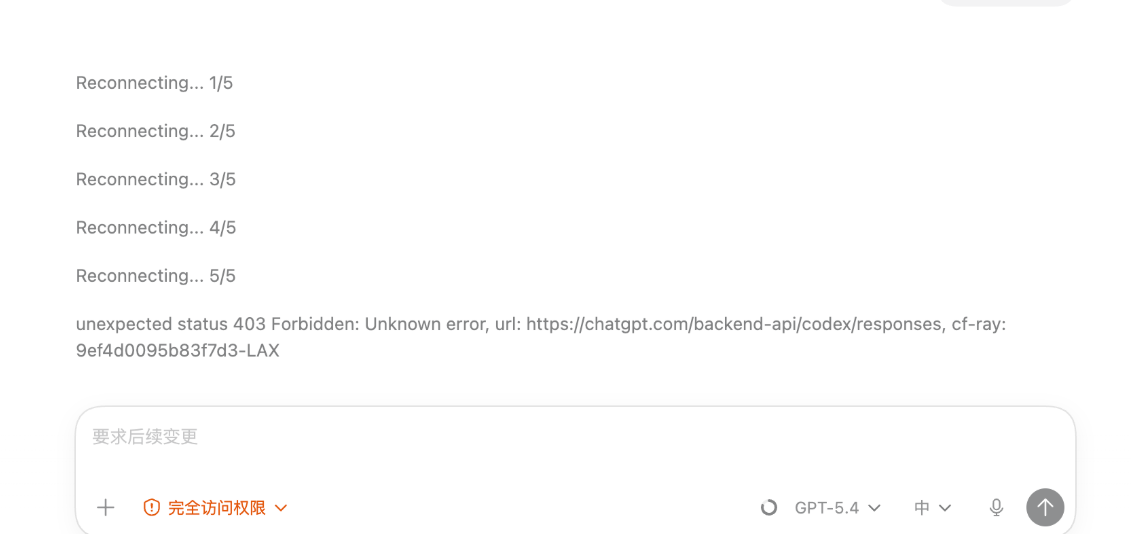 If none of those work, do not panic. The rest of this guide covers every cause I could reproduce, a full 8-step fix list, and how to tell a temporary GPT 403 from something worse, like a deactivated account or a full outage.
What Causes the GPT 403 Forbidden Error?
A 403 response is not a secret message. It just means OpenAI's servers said no to your request, usually for one of the reasons below. I grouped these by what you can actually check, not by HTTP jargon. (For the strict definition, MDN's HTTP 403 reference explains the status code itself.)
| Cause | What it looks like | How to confirm |
|---|---|---|
| Expired session | Login page loops, requests bounce back with 403 | Sign out everywhere and sign in again |
| Cookies or cache | Works in incognito, fails in your normal browser | Clear site data for chatgpt.com only |
| VPN or proxy | 403 appears only when the VPN is on | Toggle the VPN off, retry |
| IP security restrictions | 403 on every device on one network | Check your IP type, switch networks |
| Regional or network limits | 403 in one region, fine elsewhere | Try mobile data or a different region |
| Account status | 403 persists after all local fixes | Check billing and account status on the account page |
| Temporary service-side issue | 403 for many users at once | Watch status.openai.com for an incident |
One thing worth knowing: an expired session and a stale cookie cause the same GPT 403 Forbidden error text, but they are different problems with different fixes. That is why the diagnosis section below matters more than any single fix.
Does GPT 403 Mean You're Banned? 403 vs Deactivated vs Down
This is the question everyone asks first, so let me answer it plainly: a GPT 403 error is usually temporary and local, not a ban. A banned or deactivated account shows a different error, and an outage affects everyone at once. Use this table to figure out which bucket you are in.
| What you see | Most likely cause | What to do |
|---|---|---|
| 403 only on one browser or device | Cookie, cache, or session issue | Clear site data, sign in again |
| 403 only when your VPN is on | IP or proxy block | Turn the VPN off or switch servers |
| 403 on every device and network | Account status or IP-level block | Check your account page; if it persists, contact support |
| "You do not have an account because it has been deleted or deactivated" | Account deactivated | Contact OpenAI support to appeal |
| 403 for everyone, same time | OpenAI outage | Wait, watch status.openai.com |
| 401 Unauthorized instead of 403 | Session expired, not an access block | Sign in again |
The quickest way to check: open chatgpt.com in an incognito window while logged out. If the site loads fine, the problem is on your side. If it still returns a GPT 403 Forbidden error while logged out, the issue is more likely network-wide or server-side. A deactivated account is an account-status issue and is different from a temporary 403 access restriction, so do not assume the worst before you check.
How to Fix GPT 403 Error: 8 Step-by-Step Fixes
Work through these in order. Each one takes under two minutes, and most people are back in within five. I ordered them by how often they actually resolve the GPT 403 error in the field, not by how they sound.
1. Check GPT's server status. Open status.openai.com. If a service is marked as an outage or degraded, the honest fix is to wait. Nothing else on this list will help until it clears.
2. Turn off your VPN or proxy. This is the single most common cause I hit while testing. VPN or proxy IPs can sometimes trigger access restrictions, and a flagged region can produce a GPT 403 Forbidden error right after you connect. Turn the VPN off, or switch to a different server, and retry.
3. Clear GPT cookies and site data. In your browser settings, clear cookies and cache for chatgpt.com and auth.openai.com only, so you do not log out of everything else. On mobile, deleting and reinstalling the app does the same job.
4. Sign out and sign in again. If the page loads but keeps bouncing to the login screen, sign out everywhere and sign in again. This clears stale session tokens that a refresh never touches.
5. Try another browser or incognito mode. This isolates extensions. Ad blockers and privacy tools have broken the GPT interface more than once, and incognito usually loads clean in seconds.
6. Switch to a different network. Turn Wi-Fi off and back on, or switch to mobile data for one test. If the GPT 403 error follows you across two different networks, the network is not the cause.
7. Check your device date and time. A device clock that drifted off sync can make GPT reject the request outright. Enable automatic time sync and retry. If this is a temporary IP restriction, waiting a few hours usually clears it on its own.
8. Contact OpenAI support. If you have tried every fix above and the GPT 403 error keeps coming back, or you believe your account was flagged by mistake, submit a ticket through the OpenAI Help Center. Include the exact error text and what you have already tried.
When a GPT 403 Error Won't Be Fixed by Troubleshooting
Some 403 cases are not fixable from your side, and knowing which ones saves you an hour of useless clicking. This decision table covers the "nothing I do helps" situation.
| Situation | What it means |
|---|---|
| Everyone gets 403 at the same time | Possible outage |
| Only one network gets 403 | Network or IP issue |
| Only the VPN connection gets 403 | VPN or IP issue |
| Every device and account gets 403 | Account-side issue |
| The 403 comes and goes | Temporary restriction |
The pattern to remember: if the GPT 403 error shows up everywhere at the same time, it is probably an outage. If it only shows up in one browser, on one network, or with the VPN on, it is local and fixable. If it keeps coming back after every fix, check account status before you blame your computer. Our guide to GPT account deactivation covers what a flagged account actually looks like and what to do about it, and if the page simply will not load at all, the fixes in our GPT not loading guide apply before you reach for anything dramatic.
Can Shared GPT Accounts Trigger More 403 Errors?
Short answer: in some cases, yes, but it depends on the login pattern, not on the account itself. A shared GPT account has several people logging in from different devices and IPs. Some IP security systems treat that mix of locations as suspicious, and depending on how often the credentials rotate, you may see more access-related errors than you would on a personal account. This is a scenario correlation, not a certainty, and I did not find official OpenAI data that claims shared accounts cause 403 errors.
If you use a shared account, the practical way to lower the odds is to keep the login pattern steady: use a fixed device and IP where you can, do not share the credentials beyond the group, and grab the latest password from your order page after every rotation. None of that is a guarantee, but it reduces the "why am I getting 403 today" moments. Related error messages, like rate limits and usage caps, can look similar, and our GPT rate limit guide separates those from access blocks.
The other option is a personal account with a consistent login pattern, which sidesteps the multi-user IP mix entirely. If you want a stable, private login and cannot pay for GPT Plus directly because you lack an overseas card, our GPT Plus top-up service is worth knowing about. And if you are comparing shared vs personal access, our shared GPT subscription guide lays out the difference plainly.
FAQ: GPT 403 Forbidden Questions Answered
Q1: Does GPT 403 mean my account is permanently banned?
No. A GPT 403 Forbidden error is usually a temporary access restriction caused by your browser, network, or IP. A deactivated account shows a different message and is an account-status issue, not a 403. If your account really was deactivated, you will see a message telling you the account was deleted or deactivated, and OpenAI support can help you appeal.
Q2: Can clearing cookies fix a GPT 403 error?
Yes, in many cases. Stale cookies and site data are one of the most common causes. Clear cookies and cache for chatgpt.com and auth.openai.com only, then sign in again. If the error only happens in your normal browser but not incognito, cookies are almost certainly the cause.
Q3: What's the difference between GPT 403 and 1020?
403 Forbidden means the server refused the request. 1020 is a Cloudflare-specific access-denied code that OpenAI also uses for IP restrictions. Both usually point to the same family of causes: IP blocks, VPN issues, or regional restrictions. If you see 1020, the VPN and IP checks from the fix list above apply first.
Q4: How do I fix GPT 403 on mobile?
Update the GPT app, then clear its storage or reinstall it. If you are on mobile Safari or Chrome, clear the site data for chatgpt.com. Turn off any VPN or ad blocker on the phone, then sign in again. The same 8-step list applies, with the app update as the first mobile-specific step.
Q5: Can a shared GPT account cause 403 errors?
It can contribute in some cases, depending on how many devices and IPs log into it. Frequent location changes can look suspicious to IP security systems. If you share an account, keep the device and network steady, and if the errors keep happening, a personal account with consistent login behavior may be a better fit.
Q6: Why does GPT show 403 after login?
Usually it is a session or cookie problem. The login succeeds, but a stale session token or leftover site data gets refused on the next request, which comes back as a GPT 403 Forbidden error right after you sign in. Sign out everywhere, clear site data for chatgpt.com, and sign in again. If it still appears while you are logged out, the cause is more likely network-wide.
Q7: Why does GPT work without a VPN but show 403 with one?
Because the VPN changes the IP address the request comes from, and some VPN or proxy IPs can trigger access restrictions. The same browser and account can behave differently with the VPN on or off. Turn the VPN off, or switch to a different server, and retry before you change anything else.
Conclusion: Get Back to GPT After the 403 Error
Here is the whole guide in one line: check the outage, check the network, check the session, check the account, in that order. Most GPT 403 errors are local and temporary, and the first three fixes in the list resolve them without touching your account at all.
If you need a more consistent login experience and privacy, a personal account is the safer long-term choice, and our top-up service gets you GPT Plus without needing an overseas card. If budget matters more and you are comfortable with shared access, our shared GPT subscription guide explains the costs and the trade-offs honestly. Either way, you should be back to typing your questions in a few minutes, not a few days.