
Grok vs Gemini in 2026: Which One Is Worth Paying For?
Last checked: October 16, 2026. Prices are US list prices before tax, and both vendors changed something in the last four days.
Most Grok vs Gemini comparisons answer a question that expired this week. On October 12, xAI folded Grok, Grok Bot, Cursor and X Premium into one plan called The X Subscription (xAI's announcement of the bundled plan), and the old SuperGrok ladder stopped being sold to new customers. On October 13, Google opened Gemini 4 Argon to AI Pro subscribers at $19.99 a month (Google's launch post for Gemini 4 Argon). Anything published before then has the wrong plans in it.
Here is the short answer to Grok vs Gemini, in the order people actually need it.
Pick Grok when your work depends on what is being said on X today. Grok has a distinctive advantage for users who want direct access to public X conversations through its search tools. However, access to live information alone does not guarantee more accurate or useful answers. Since October 12, a single subscription tier can also bundle access to Cursor and Grok Bot, depending on the tier.
Stay free if your use is occasional: a few questions a day, no long documents, no coding. For that kind of Grok vs Gemini use, neither free plan's missing flagship matters, and what you would pay for only shows up once volume or file size rises.
Do not pick either one on coding reputation. Published scores come from different harnesses and disagree with each other, which we get into below.
One limit gets left out of most Grok vs Gemini write-ups, and it costs people money. Paid Grok usage is a single weekly pool drawn down by the Grok app, the Grok tab on X and Cursor at once, so an afternoon of coding eats your chat budget. Argon is not free and not on AI Plus, so $19.99 is the floor.
Assembling this took longer than it should have. xAI's release notes, Google's launch post and months of threads in r/grok and r/GrokBot told three different stories about what a plan is called. Where they conflicted, we used the vendor's page.
Grok vs Gemini in 2026: What Each One Actually Is
The Grok vs Gemini question starts with what each product is this week.
Grok runs on Grok 4.7, released September 21, 2026. It takes text and images in, returns text only, and has a 500K-token window with a May 2026 knowledge cutoff (xAI's model list). With no server-side search on, Grok has no knowledge of current events, and the live X access people buy it for is a tool call, not part of the model.
You also do not buy Grok on its own any more. Since October 12 you buy a tier of The X Subscription, from Free up to Ultra at $200 a month. Premium at $30 is what xAI pushes, because it bundles what the company says used to cost $90 a month across SuperGrok, Cursor Pro and X Premium+.
Gemini runs on a ladder. Free and AI Plus get Flash-class models. AI Pro and Ultra get Gemini 4 Argon, released publicly on October 13 with a 1,048,576-token window shared across input, thinking and output, and text, image, video, audio and PDF in (Google's launch post for Gemini 4 Argon). At $19.99, AI Pro is the cheapest way to use Argon in the app and in AI Mode.
Grok's free tier gives daily access with tight limits, covered in is Grok free. Argon has never been free, and the previous generation is covered in how Gemini 3 compared against GPT-5.2.
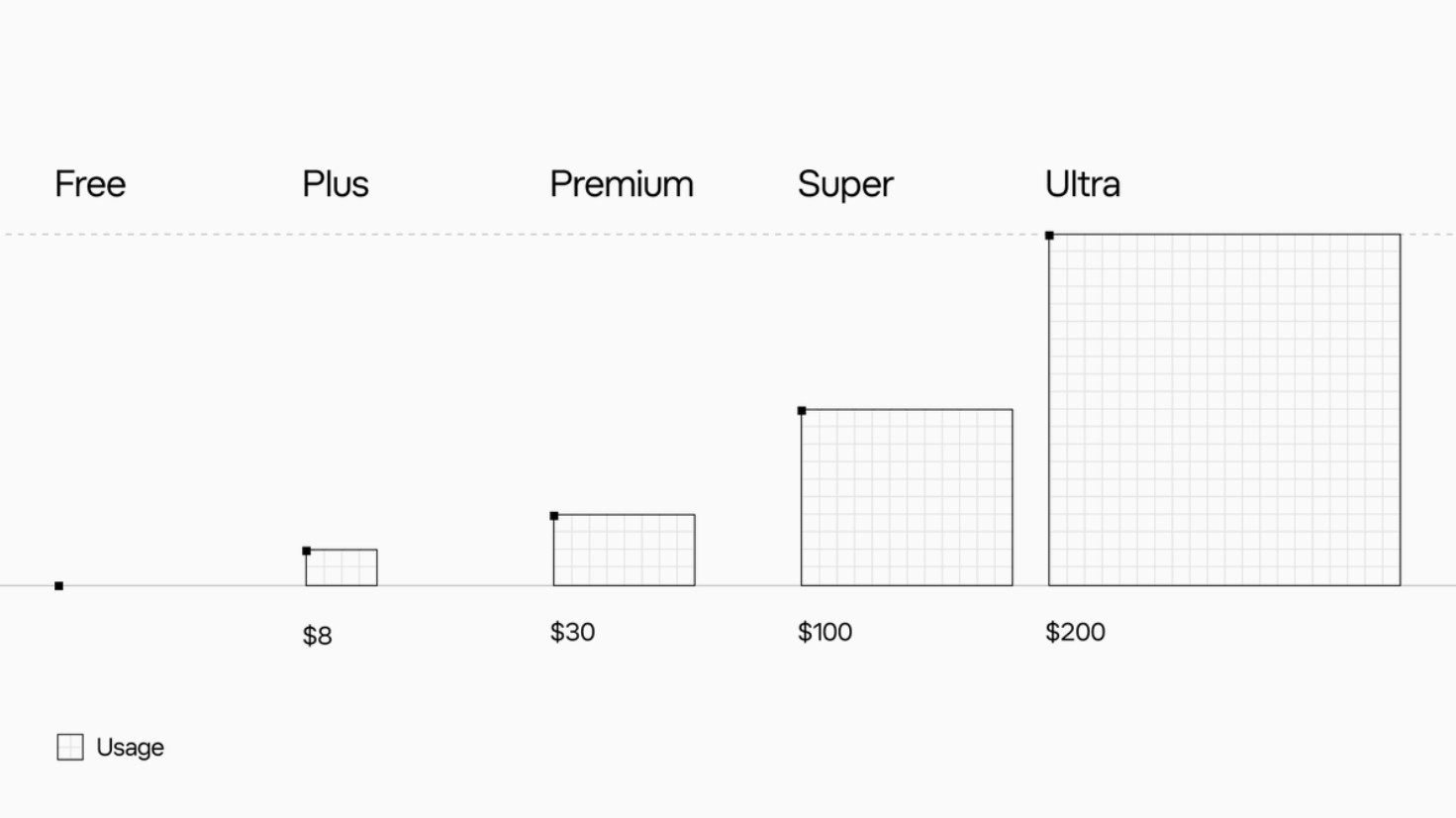
Neither side of the Grok vs Gemini fight publishes absolute usage numbers for consumer plans. Google gives multiples of the free tier, about 2x on Plus and 4x on Pro. xAI gives multiples of Plus: 4x on Premium, 15x on Super, 50x on Ultra. Any article quoting a fixed number of messages per window is quoting a figure the vendor does not stand behind.
In Grok vs Gemini, one side sells access to a conversation happening now. The other sells depth, file handling and a seat inside software you already pay for.
Grok vs Gemini Head-to-Head: The Comparison Table
The Grok vs Gemini table below keeps version numbers in its cells rather than in the labels, so it should still read correctly next month. Both ladders are in the pricing section.
| Dimension | Grok | Gemini |
|---|---|---|
| Current flagship | Grok 4.7, released September 21, 2026 | Gemini 4 Argon, public October 13, 2026 |
| Context window | 500K tokens | 1,048,576 tokens, shared by input, thinking and output |
| Input types | Text and images | Text, images, video, audio, PDF |
| Live data source | X Search and web search, when available, plus web search | Google Search grounding |
| How usage is counted | One shared pool across Grok, X and Cursor, resets weekly | Multiple of the free tier, refreshes every few hours up to a weekly cap |
| Ecosystem | X, Grok Bot, Cursor | Gmail, Docs, Drive, Android, Chrome, Antigravity |
| Coding surface | Cursor agents on Grok models | Antigravity agents, built into the Gemini Mac app |
| API rate vs plan price | Separate bill, $2 in and $6 out per 1M tokens | Separate bill, $2 in and $10 out per 1M until November 30 |
| History and memory | Tied to one X account | Tied to one Google account |
Three rows of the Grok vs Gemini table are the ones you rarely see elsewhere. Usage counting decides whether a plan feels generous: Grok's weekly pool is flexible if you split time between chat and code and punishing if you do not, because Cursor spends the same allowance your chats do. Gemini's multipliers are harder to exhaust in an afternoon. The API row is where readers get misled, because token rates and subscriptions are two different bills.
For the Grok side in more depth, including the older tiers, see our full Grok pricing breakdown.
Grok vs Gemini for Coding, Research, and Image Generation
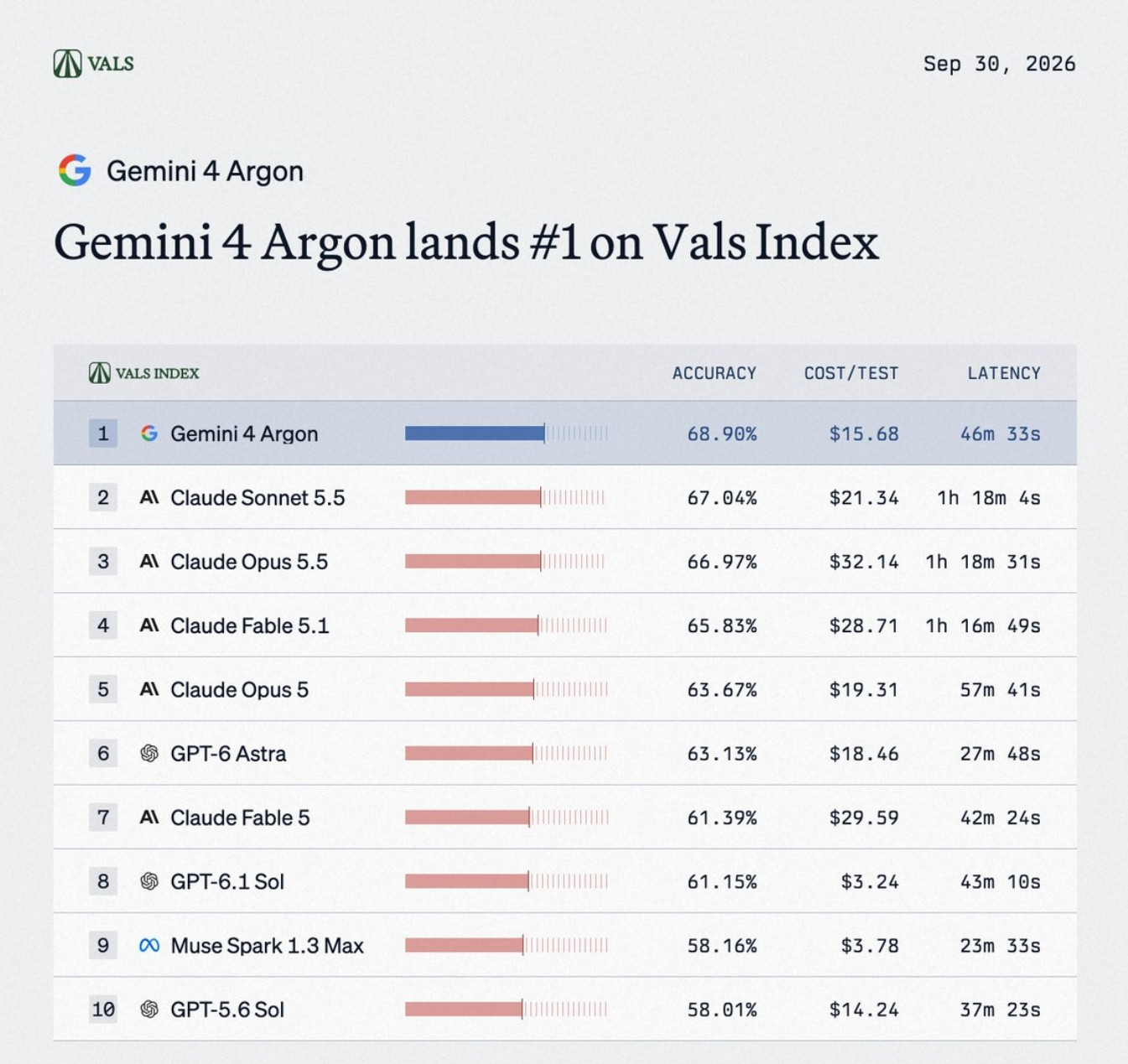
Coding. Keep three things apart. The scores: xAI publishes Grok 4.7 at 46.3% on CursorBench 4.0 against 40.4% for Grok 4.6, and Vals AI's GDP-weighted index lists Gemini 4 Argon first as of October 13 (the Vals Index leaderboard). One is a vendor benchmark, the other a third-party index, so neither ranks these two models against each other. The specs: Grok 4.7 takes 500K tokens and returns text only, Argon a shared 1M window plus video and audio, and a bigger window holds more code at once rather than better code. Published benchmarks offer useful signals, but they do not establish which model will perform better on your own coding tasks. The most relevant comparison is how each model handles the same codebase, tests, and constraints.
Research. Grok's advantage is current conversation: ask what people are saying today and it pulls from X, as a tool call that only fires when search is on. Gemini answers through Search grounding and Deep Research and can hold a whole report in one prompt, though a 900K-token prompt leaves little room to answer.
Image and video. Options versus accuracy. Grok Imagine returns several candidates at once, and details sometimes come out wrong. Video only starts at Premium. Gemini leans toward one result more likely to be right first time, with Nano Banana 2 for images, Veo for video and monthly Flow credits on AI Pro. Two links if something breaks: when Grok Imagine stops working and how we suggest setting Gemini up.
Where people land beats either vendor's chart. In r/GrokBot and r/AI_Agents, a Grok vs Gemini comparison usually ends the same way: which single subscription to keep on a tight budget, decided by ecosystem rather than model quality. Both links go to subreddit front pages rather than single threads, since we could not verify individual posts from here.
How to Test Grok vs Gemini Yourself: A Repeatable Same-Prompt Protocol
A decision made on somebody else's screenshot is a decision on a prompt you did not write. The protocol below is for you to run, not a test we ran for this page: we report no results, only the four prompts and the scoring. Budget about an hour and run all four on the same day.
| Group | Fixed condition | What to record |
|---|---|---|
| A, long document | One public filing or annual report near 150K tokens. Prompt: "List three figures and quote the sentence each one came from." | Did it truncate. Were the numbers right. How long it took. |
| B, live information | Prompt: "What are three things people are saying today about [topic]." | Whether you get source links you can open. Whether search was actually invoked. |
| C, coding | One 30-line function with a known bug. Prompt: "Find the bug and give the smallest fix that works." | Correct location. Does the fix run. How many turns. Score 1 to 5. |
| D, image | One concrete scene description. | Whether the first attempt was usable. Obvious errors. How many retries. |
Three rules make the Grok vs Gemini protocol mean something. Run free and paid tiers separately, because a free-tier loss tells you nothing about the paid model. Write the run date beside every score. Have someone else score group C blind.
If the Grok vs Gemini protocol feels like too much work, the cheap substitute is a usage log. Note your weekly allowance on day one, note where it went, and note the day you hit the cap. Two weeks of that tells you whether a tier fits, and on the Grok side it is the only way to learn how fast Cursor spends the pool. The mechanics are in SuperGrok weekly quota limits.
Grok vs Gemini Pricing: Official Plans and What You Actually Pay
Two ladders, one per side, every price from a vendor page.
The X Subscription, what new Grok customers buy as of October 12 (xAI's announcement of The X Subscription):
| Plan | Price | Included usage | Notes |
|---|---|---|---|
| Free | $0 | Daily Grok access, starter Cursor allowance | No Grok Bot, no video generation |
| Plus | $8 a month, $80 a year | Baseline | X checkmark, creator tools, fewer ads |
| Premium | $30 a month, $300 a year | 4x Plus | Grok Bot and video generation start here |
| Super | $100 a month, $1,000 a year | 15x Plus | Priority access at peak times |
| Ultra | $200 a month, $2,000 a year | 50x Plus | Highest usage tier |
Two things sit outside that Grok vs Gemini table. Old SuperGrok plans are closed to new sign-ups, but subscribers keep their price until they move, so is SuperGrok still worth it still applies. Third-party models in Cursor bill separately at API list prices from Premium up.
Google AI plans, from Google One's plan comparison page:
| Plan | Price | Usage vs. Free | Storage | Gemini 4 Argon Access |
|---|---|---|---|---|
| Free | $0 | Baseline | 15 GB | No |
| Google AI Plus | $4.99 a month | About 2x free | 400 GB | No |
| Google AI Pro | $19.99 a month, or $199.99 a year | About 4x free | 5 TB | Yes |
| Google AI Ultra | $99.99 or $199.99 a month | 5x or 20x Pro | 20 TB or 30 TB | Yes |
The Grok vs Gemini entry gap is $8 against $4.99, and the tier each vendor promotes is $30 against $19.99, a $120-a-year gap before tax. Annual billing narrows it: Google's Pro works out at about $16.67 a month, and the X Subscription's annual prices run from $80 for Plus to $2,000 for Ultra.
API token rates are a separate bill. Grok 4.7 costs $2 per million input tokens and $6 per million output below 200K prompt tokens, rising to $4 and $12 above that line (xAI's model list). Gemini 4 Argon costs $2 and $10 per million until November 30, then $4 and $20 (Google's launch post for Gemini 4 Argon).
That is the honest shape of the Grok vs Gemini cost question: one bundle has a weekly meter, the other a multiplier. Neither sells you a number you can check.
One discount worth checking before paying either side of Grok vs Gemini: Google has offered students a free year of AI Pro in a number of countries, tracked in Gemini Pro free for students.
How to Subscribe to Grok or Gemini, and What to Do If You Can't Pay
Whichever way your Grok vs Gemini decision went, subscribing is easy if your card works. For Grok, open grok.com or the Grok tab in X, pick a tier and pay. For Gemini, open the Gemini app or one.google.com, choose upgrade, pick AI Pro or Ultra and pay. Both go live immediately.
Where a Grok vs Gemini subscription stops being easy is payment. Neither vendor accepts every card in every country. A card without international billing, a billing address in the wrong region, or a currency you do not hold will fail at checkout. Worth trying first: your phone's app store may sell the same tier in local currency, or your bank may be blocking the charge. Google prices by region, so the figure you see is your account's country.
If official checkout is unavailable, a personal Grok account top-up through FamilyPro is another option to evaluate. Before using a third-party service, check how the payment is handled, whether you retain control of your account, and what account-related risks may apply. Chat history and memory are associated with your account, but you should review the service terms and account setup carefully before proceeding.
A shared Grok seat or a shared Gemini seat costs less and suits occasional use. Be clear about the trade: memory and history are shared across everyone on the account, so clear your context often and keep anything sensitive out of shared chats. xAI's own pricing FAQ says subscriptions are sold only through X Subscription Corp and that accounts bought elsewhere may be suspended. The saving is real and so is that risk.
If your work is mostly long documents and Google files, start with Gemini on AI Pro. If it is live conversation on X plus coding agents, the $30 Premium tier is where the Grok bundle makes sense. Otherwise stay free and revisit in a month.
Grok vs Gemini FAQ: The Questions People Actually Ask
Which Side Wins the Grok vs Gemini Comparison in 2026?
Neither, and that is not a dodge. Grok wins on live X data and on bundling Cursor and Grok Bot into one bill. Gemini wins on long documents, multimodal inputs and Google Workspace. Choose by where your work lives, not by a benchmark chart.
Which Is Better for Coding, Grok or Gemini?
In the Grok vs Gemini coding matchup, published scores come from different benchmarks and evaluation setups, so they should not be treated as a direct ranking of the two models. Use them as reference points, then test both models on the same coding tasks and constraints. What the specs change is how much code you can paste at once: 500K with text-only output on Grok 4.7, a shared 1M that also takes video and audio on Argon. Neither says which writes better code, so run group C on your own.
Which One Handles Image Generation Better?
On images, Grok vs Gemini comes down to options versus accuracy. Imagine returns several candidates at once, and details sometimes come out wrong. Gemini leans toward one image more likely to be right first time, and AI Pro includes monthly Flow credits.
Are Grok and Gemini Free, and What Do They Cost?
Both offer free tiers with usage limits, but the models and features available can differ by plan and change over time. For occasional use, compare the current free-tier limits before paying for either subscription. Paid Grok starts at $8 a month on The X Subscription, paid Gemini at $4.99, and the tier each vendor promotes is $30 against $19.99. Full Grok vs Gemini ladders are in the pricing section.
Can I Use Grok and Gemini Together?
Yes. Running Grok vs Gemini side by side on one desk works fine, and the accounts are independent. What does not transfer is the exclusive part: X access stays with Grok, Workspace and Antigravity stay with Google. Budget for two subscriptions.
Is There a Cheaper Way to Use Grok or Gemini?
Two paths, with different tradeoffs. A personal top-up may be an option when official checkout is unavailable, but check the payment process, account control, privacy terms, and potential account risks before using a third-party service. A shared seat is cheaper but shares account-level memory, and on the Grok side carries a suspension risk stated in xAI's own FAQ.